

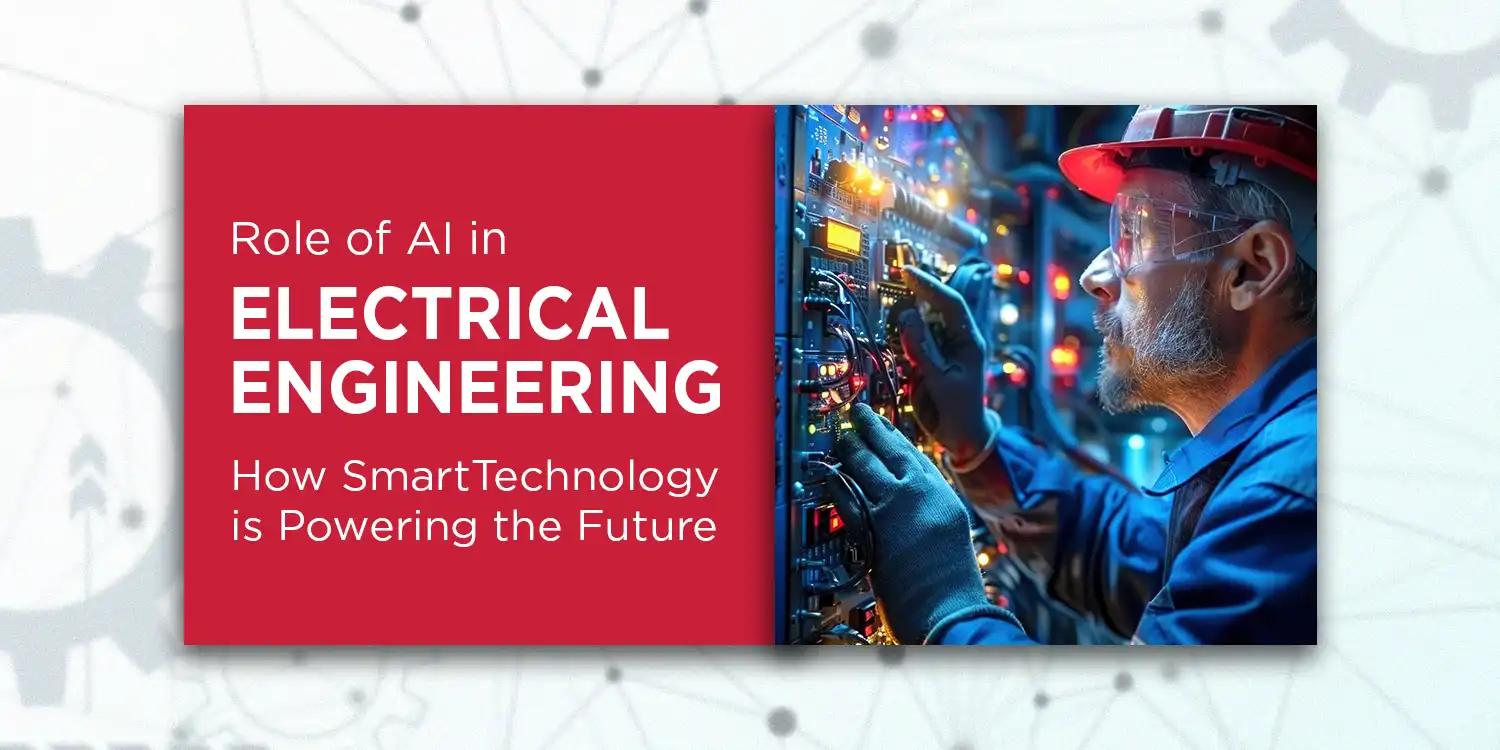
Artificial Intelligence (AI) is not just a concept for the future; it is transforming industries around the globe, including electrical engineering. The rise of technologies in Industry 4.0, along with significant government investments in digital infrastructure and sustainable energy, has led to a growing need for electrical solutions that use AI, machine learning, IoT, and data analysis.
In today’s era, an electrical engineer is supposed to be well-versed in AI along with the traditional knowledge of engineering. Whatever it may be, whether it is reducing power outages, energy efficiency, integration of renewable energy, or autonomous electrical systems, AI plays an important role in the future of electrical engineering.
Table of Content
- Introduction to AI in Electrical Engineering
- Key Applications of AI in Electrical Engineering:
- Smart Grids and Energy Management
- Predictive Maintenance
- Automation and Robotics
- Renewable Energy Integration
- Fault Detection and Diagnosis
- Why Electrical Engineers Need to Learn AI Today?
- Thinking About a Career in This Field? Here’s Where to Start
- Career Opportunities in AI-Driven Electrical Engineering
- Future Scope of AI in Electrical Engineering in India
- Conclusion
Introduction to AI in Electrical Engineering
Artificial intelligence (AI) has changed the world of Electrical Engineering. It offers systems with the ability to learn from data, make judgments, and operate to optimum effect without human assistance.
It can handle large amounts of data and produce useful output, find errors, and use electrical energy more efficiently right now.
In electricity, artificial intelligence systems have assisted the growing industry with smart grids, automated operations, and clean energy generation technology for safer infrastructure.
Key applications of AI in Electrical Engineering
1. Smart Grids and Energy Management
Artificial intelligence technology finds usage in smart grid technology, where it helps in monitoring electrical energy utilization and demand, efficient utilization of electrical energy, and managing energy allotment to consumers.
2. Predictive Maintenance
AI monitors electrical infrastructure in a novel way—proactively. AI is used to track systems and identify how likely they are to fail. Smart diagnostics identify maintenance needs even before a part shows any signs of breakdown.
As a result, AI minimizes unpredictable outages, minimizes costs for maintenance, and increases component life cycles for systems such as transformers and generators.
3. Automation & Robotics
One application is automation, where AI plays a major role. In electrical networks, for instance, robot systems programmed with artificial intelligence inspect, install, and repair electrical wires, ultimately improving human safety, as humans do not have to come into contact with hazardous conditions that arise when working at high voltage or underground.
4. Renewable Energy Integration
The ever-increasing number of those who wish to be ‘green’ requires that the grid infrastructure incorporate new energy generation technologies such as wind or solar power. Such systems will use AI to predict output from renewable energy sources, then balance it against the grid’s demand.
5. Fault Detection and Diagnosis
They detect electrical defects and present a solution in electric circuits quickly. They help even for a massive electrical grid, as fault diagnoses can consume much effort and time by manual means. Trends and signals can also help with a real-time AI algorithm that can detect abnormalities without further delay.
Why Electrical Engineers Need to Learn AI Today?
Believe it or not, artificial intelligence isn’t going to phase out the electrical engineer—it’s actually going to be the newest tool they’ll need to use. Just as AutoCAD or MATLAB were the new ‘must-know skills’ about ten years ago, machine learning and artificial intelligence are becoming fundamental knowledge for electrical engineers in the future.
Employers are currently seeking individuals who have expertise in both electrical concepts and artificial intelligence because these engineers will develop smarter products, analyse systems much faster, and devise more energy-efficient designs.
This is the reason why you’ll see AI, machine learning, and data analytics making their way into new electrical engineering degree programs.
Thinking About a Career in This Field? Here’s Where to Start
If all of the above sound cool to you—smart grids, predictive intelligent electric devices, etc.—then the only sensible approach is to first lay a solid foundation in electrical engineering. Luckily, it’s not an “either this or that” kind of decision anymore between electrical and AI.
You can opt for either a Diploma or a B.Tech. in electrical engineering, which are both rapidly evolving to integrate AI, automation, and data principles along with the foundational elements.
No matter where you stand, be it after completing your 10th or 12th grade or if you wish to reskill, you can find an electrical engineering path.
Here’s a closer look at what each course actually covers:
B.Tech in Electrical Engineering: Course Overview
B.Tech in Electrical Engineering is a four-year undergraduate program that prepares students to design, develop, and manage electrical systems that are used in a variety of industries. The curriculum comprises theoretical knowledge and practical training with labs, projects, workshops, and internships.
Students are trained in core subjects like power systems, electrical machines, control systems, power electronics, and renewable energy, and the program equips them with the skills for careers in the power, manufacturing, automation, and energy sectors.
Diploma in Electrical Engineering: Course Overview
Diploma in Electrical Engineering is usually a 3-year course offered to students who have passed the 10th grade. It is one of the highly practical courses in electrical engineering.
The Diploma in Electrical Engineering emphasizes practical learning with laboratory sessions, workshops, and hands-on training more than a traditional degree program. This industry-driven approach means that students are equipped with job-ready skills right from the start of their careers. Many students also opt for a diploma for higher studies and lateral entry to the second year of B.Tech in Electrical Engineering.
Career Opportunities After B.Tech or Diploma in Electrical Engineering
After doing a B.Tech or Diploma in Electrical Engineering, you can get numerous job opportunities in both public and private sectors. Graduates can be employed in sectors like power generation and distribution, manufacturing, renewable energy, automation, construction, telecommunications, railways, and electric vehicle (EV) technology.
Some popular job roles are:
- Electrical Design Engineer
- Power Systems Engineer
- Maintenance Engineer
- Site Engineer
- Control and Instrumentation Engineer
- Electrical Project Engineer
- AI-Integrated Automation Engineer
- Smart Grid Analyst
- Predictive Maintenance Specialist
- Renewable Energy Systems Engineer (AI-based forecasting)
- Robotics and Control Systems Engineer
- IoT and Embedded Systems Engineer
Companies and sectors looking for electrical engineers with a hold of AI:
- Renewable energy companies
- Automotive and EV manufacturers
- Manufacturing and industrial automation sector
- Government infrastructure projects
- Research and development organizations
Future scope of AI in Electrical Engineering in India
Electrical engineers are well positioned to lead the advancement of artificial intelligence. AI is the future of electrical engineering, and concepts such as self-driving electrical systems, smart city technology, intelligent energy systems, smart power control, etc. will see an increased pace of adoption and implementation in electrical engineering applications.
Some examples of electrical engineering applications that involve AI include the development of self-healing electrical systems.
Conclusion
The rise of artificial intelligence has taken the energy sector to a whole new level through its applications in electrical engineering. From intelligent grids and smart machines to condition-based and clean energy via the adoption of various renewable energy technologies, the use of AI has helped in making the electrical energy systems incredibly efficient, effective, and, at the same time, pocket-friendly.
The best opportunity to venture into these transformative opportunities is to pursue a Diploma or a B.Tech in Electrical Engineering along with acquiring skills in AI.
